

Communication Tip
Tips for better communication with a Deaf person
Don't shout at the deaf person.
Don't give up even if you don't understand what they are saying.
Don't be afraid to use a pencil and paper. Write down what you want to say to the deaf person.
Don't forget to face the person when you are speaking directly to them.
Don't stand in from of a bright light when you are talking to them.
Don't cover your mouth and do speak very clearly with them.
Don't exclude the deaf person from a group conversation especially in a familiar environment.
Don't forget to use your facial expressions and gestures.
Communicating With a Deaf Person During Special Events
Special events can be joyful, but they can also be challenging for a deaf or hard‑of‑hearing person.
Busy rooms, fast‑moving conversations, and loud environments can make it easy for someone to feel left out, isolated, or exhausted from trying to keep up.
These moments don’t have to be lonely. With a few thoughtful adjustments, you can help make celebrations more inclusive, relaxed, and enjoyable for everyone.
🔊 Background Noise: The Biggest Challenge

Acknowledge the struggle
Remind yourself that it’s completely okay if communication feels harder in these situations. It’s not your fault, and it’s not theirs.

Choose quieter spaces
If you’re planning to chat, pick a calm corner or step outside where background noise is lower.

Avoid noisy hotspots
Try not to talk near large groups, speakers, televisions, or sound systems. These make lip‑reading and hearing aids far less effective.
Dinner‑Time Communication Tips
Seating & Environment
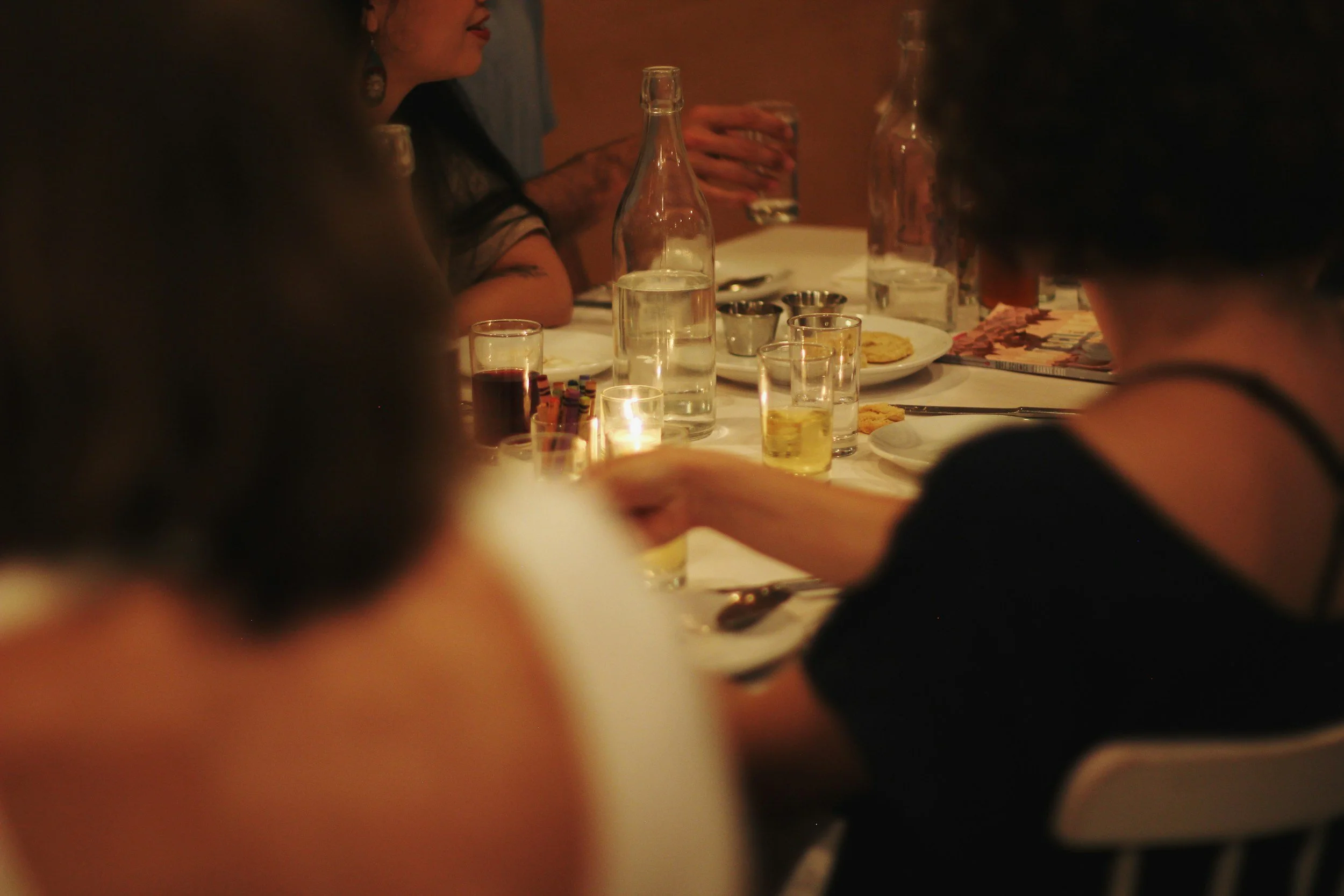
Dinner tables can be some of the hardest places for a deaf or hard‑of‑hearing person to follow conversations. People talk over each other, plates and cutlery make noise, and lighting isn’t always ideal. These small barriers can add up quickly.
Here are practical ways to make dinner time more inclusive and comfortable.
Sit centrally — Sitting in the middle of the table gives you the best chance to see everyone’s faces and follow the flow of conversation.
Let people know you’re deaf or hard of hearing — A simple reminder encourages others to face you and speak clearly.
Use expressive body language — Good facial expressions and open posture help others remember to make eye contact.
Choose round tables — Round tables allow everyone to be visible, making lip‑reading and visual cues easier.
Use a tablecloth — It softens the sound of cutlery and plates, reducing distracting background noise.
Ensure good lighting — Clear lighting makes lip‑reading and facial expressions much easier.
Talk to One Person at a Time
Take Time to Recharge
Special events often involve multiple conversations happening at once. For a deaf or hard‑of‑hearing person, this can be overwhelming.
Focus on one‑to‑one conversations — It reduces listening fatigue and helps you enjoy deeper, more meaningful interactions.
Avoid trying to follow group chatter — It’s easy to lose track and feel left out, so prioritise quality over quantity.
Listening — whether through hearing aids, lip‑reading, or concentration — is tiring.
Find a quiet space — Step away for a few minutes to reset.
Do something calming — Read a book, listen to soothing music, or simply rest your eyes.
Recharging isn’t rude — it’s necessary.
Correct Terminology
-
This is a reference to members of the Deaf community and Deaf culture.
They are proud to be Deaf and feel that Deafness is a vital part of their identity, cherished as much as ethnicity, gender, and religious background.
People in this cultural group most likely attended residential schools for the deaf, use Sign Language and view Deafness as a difference rather than a disability.
Deaf people often feel a cultural bond with one another based on sharing a common language and experience oppression.
Although they most likely recognise sign language as their primary/native language, they may or may not use speech to communicate.
-
This is a general term which encompasses many groups of people, most of whom do not identify themselves as being part of the culturally Deaf community.
People who are "deaf" are usually oral deaf people who use speech and residual hearing to communicate instead of sign language.
This definition varies in different regions, but it usually is connected to people with severe or profound hearing loss who choose to associate mainly with hearing people
-
This is usually a term for people with mild, moderate, or severe hearing loss.
Hard of hearing people often use speech as their primary mode of communication, but may be involved in the Deaf community.
This group of people usually can transition back and forth between the Deaf and hearing cultures
Hard of hearing people often form advocacy groups of their own, due to their special communication needs which are overlooked due to misconceptions about hearing loss
-
This term is considered highly offensive. Just as "deaf-mute" and "deaf and dumb" are inappropriate labels, "hearing impaired" is an outdated way to collectively label people with any level of hearing loss. It does not account for cultural identity.
The use of "hearing impaired" may be considered less blunt by many hearing people, but within the Deaf community, it is an insulting term and can be a sign of ignorance.
-
This is a label for people who have no hearing loss.
"Hearing culture" is the mainstream American culture which is primarily focused on auditory experiences rather than visual experiences.